
What to expect
Insight Scans
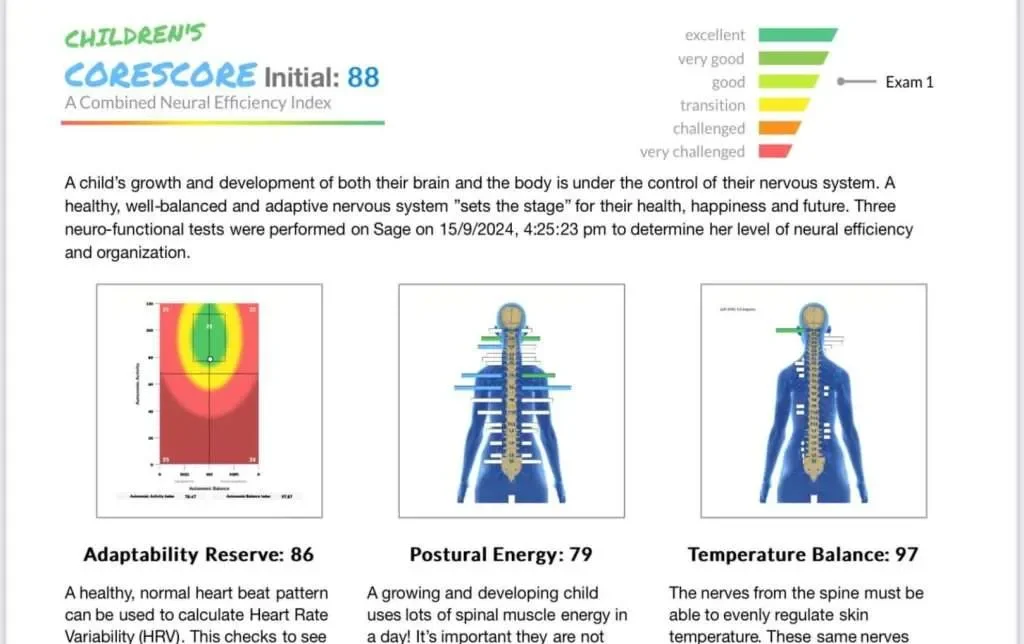
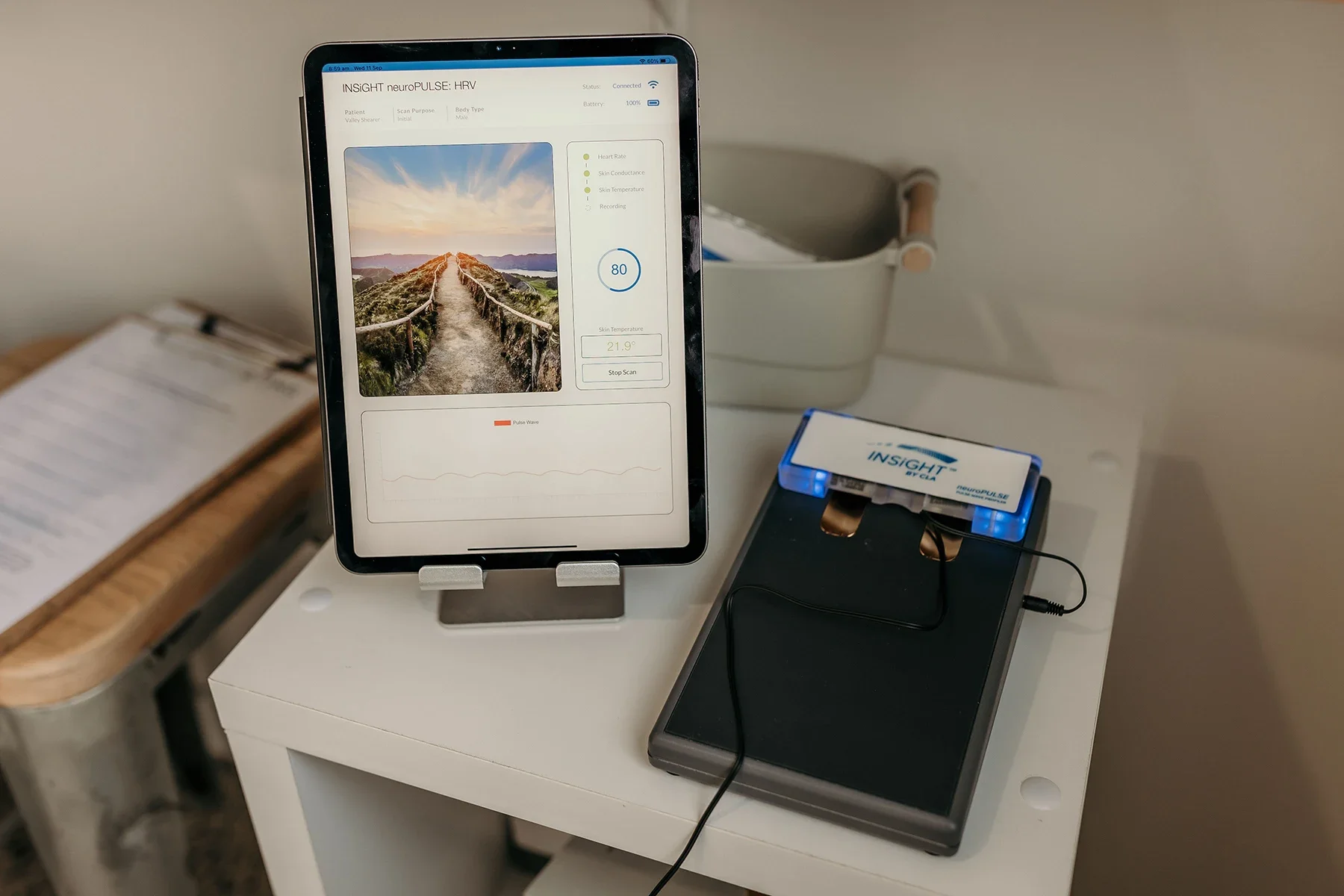
INSiGHT Scan technology was developed over 30 years ago as a tool to assess, measure and track changes in the neurospinal system. It utilises three primary scans – outlined below – to produce an overall insight into the capacity and function of the various branches of the central and autonomic nervous systems, including identifying deficiencies, dysfunctions and imbalances so that they can then be adequately addressed. Over the past three decades this technology has been rigorously tested and researched and continuously upgraded. INSiGHT Scanning Tools are FDA tested and approved.
At Better., we don’t guess, we test. And we take this very seriously. That’s why we have the most up-to-date INSiGHT hardware and technology and our team is fully trained in its application, as well as understanding and interpreting scan results to provide clear and informative answers to all of our patients, from infants to elderly. We are one of only a few chiropractic practices in Australia to offer this.
What do the INSiGHT Scans look for and measure?

Neuro Pulse (Heart Rate Variability)
Heart Rate Variability (HRV) is known in the medical scientific literature as a measure of human adaptability. In other words, HRV scans can measure how well an individual’s nervous system is adapting to all of the stressors in their lifestyle (common stressors include physical activity, emotions, sleep, nutrition, medication, growth and development).
HRV scans measure the variance in milliseconds between individual heart beats, which indicates how well balanced (or unbalanced) the autonomic nervous system (ANS) is functioning, and in particular, the vagus nerve. The ANS has two “sides”:
Sympathetic. Often referred to as the “fight or flight” branch of the nervous system. You can think of sympathetic neurology as the body’s “gas pedal”.
Parasympathetic. Often referred to as the “rest and digest” branch of the nervous system, largely coordinated by the incredible vagus nerve. You can think of parasympathetic neurology – or the action of the vagus nerve – as the body’s “brake pedal”.
To put it simply, HRV scans can help us to understand if a child or adult is “stuck” in a fight or flight state and if this is compromising the overall capacity or bandwidth of their nervous system to keep up with the demands of their lifestyle. Just like a Garmin or Apple watch can tell us if our body battery is charged or depleted, the INSiGHT HRV Scan shows us both body battery and overall balance between sympathetic and parasympathetic neurology. Significant and prolonged impairment of autonomic balance is termed dysautonomia and can present in a wide array of symptoms due to the fact that the autonomic nervous system regulates and coordinates almost all of our body’s functions, from breathing to digesting to sleeping!
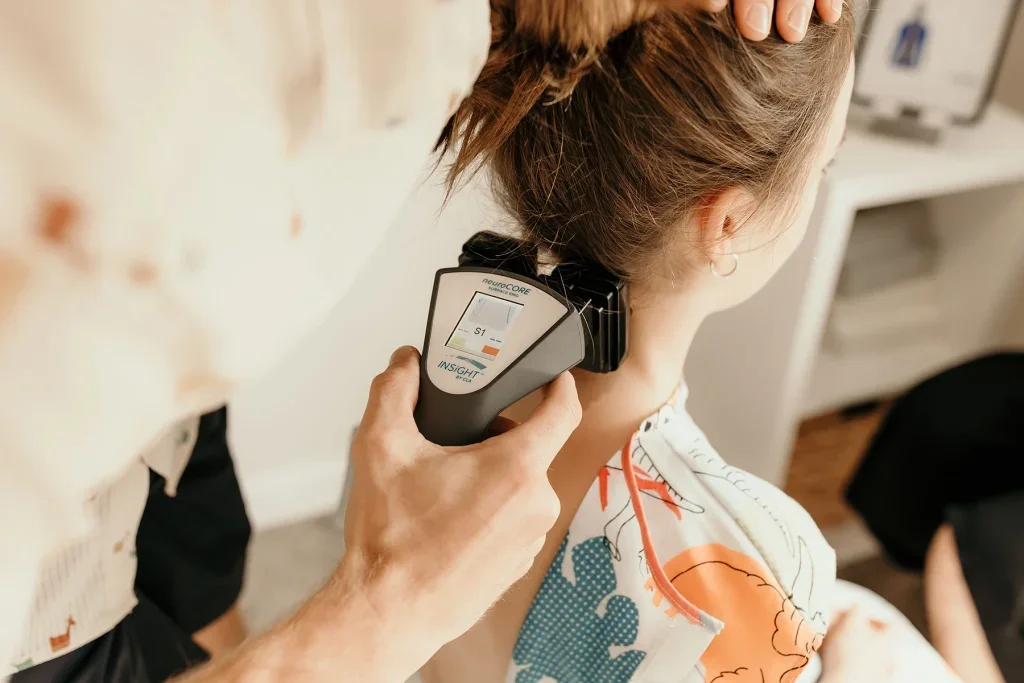
Surface electromyography measures muscle tone. More specifically, the INSiGHT Neuro Core Scan assesses the neuromuscular tone of the vitally important soft tissues that move, stabilise and support the spine.
We can utilise this information to understand the management of energy output and economy of the body; kind of like how the RPM dial in a car tells us if the engine is revving too high, struggling to idle or running efficiently and economically.
The results of this scan can be especially helpful in our efforts to improve things like postural distortion, musculoskeletal aches and pains, low tone, high tone or tension. The EMG scan provides useful information about how our children’s rapidly growing bodies are adapting to such significant changes in their internal and external environment.
Neuro Core (sEMG)
Neuro Thermal (Thermography)
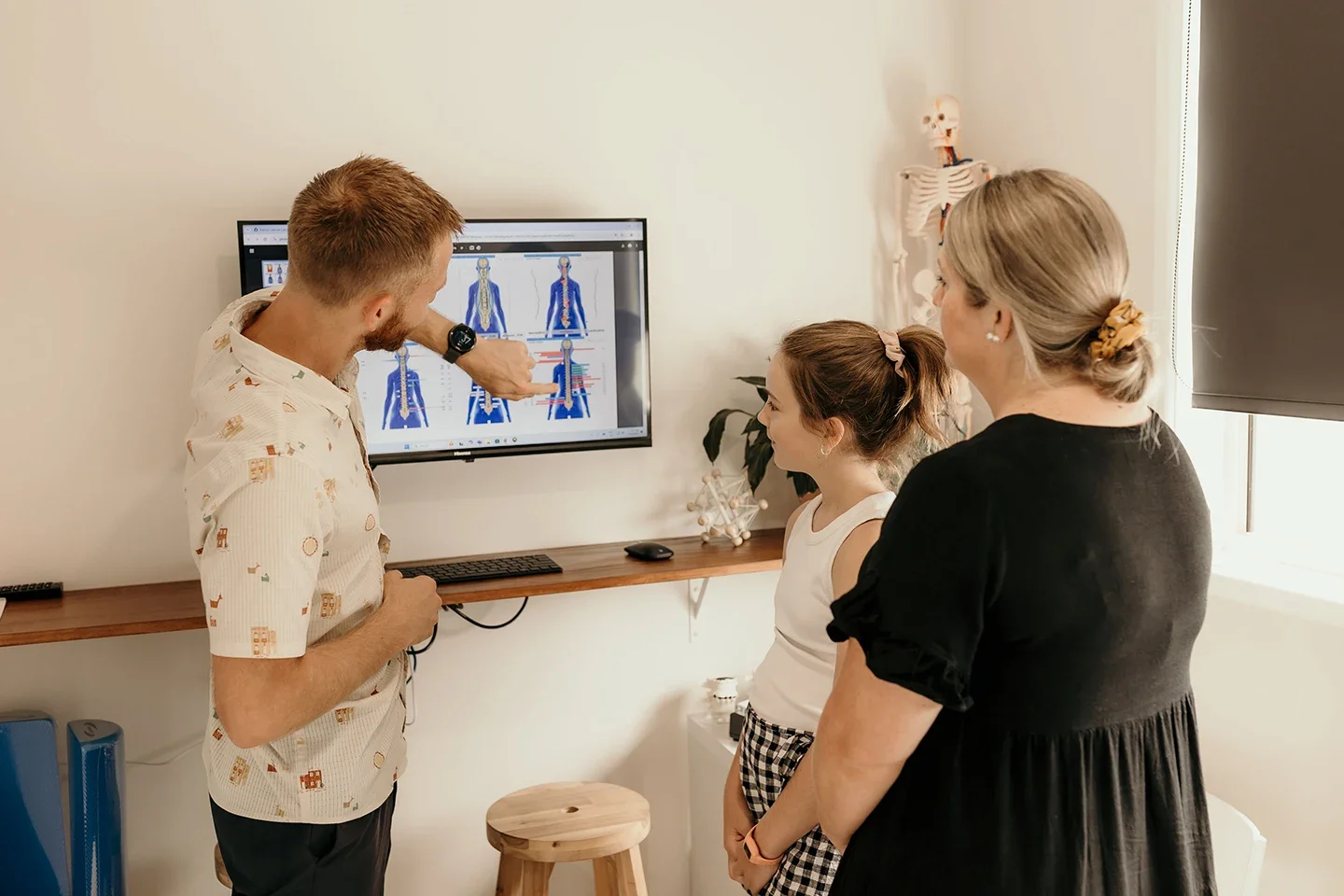
Spinal thermography can give us a greater understanding of potential regional dysautonomia. This scan can indicate if neuromusculoskeletal dysfunction (imbalances and abhorrent movement in the spinal column) are beginning to have a deeper effect on the nerves that coordinate the function of our vital organs.
All of our organs are constantly communicating with the brain via the spinal cord. Each vertebral level of the spine is anatomically associated with – or connected to – a particular organ or gland. If mechanical distortion at any point in the spine is persistently present, this may lead to abnormal function of the corresponding organ system and may present as symptoms associated with that organ, if not already present! This is called regional dysautonomia and is what we aim to measure using the INSiGHT Thermal Scan.
This scan can be especially insightful for patients who are suffering with symptoms that are more organic in nature, for example, digestive trouble, hormones, immunity challenges or cardiorespiratory challenges.